

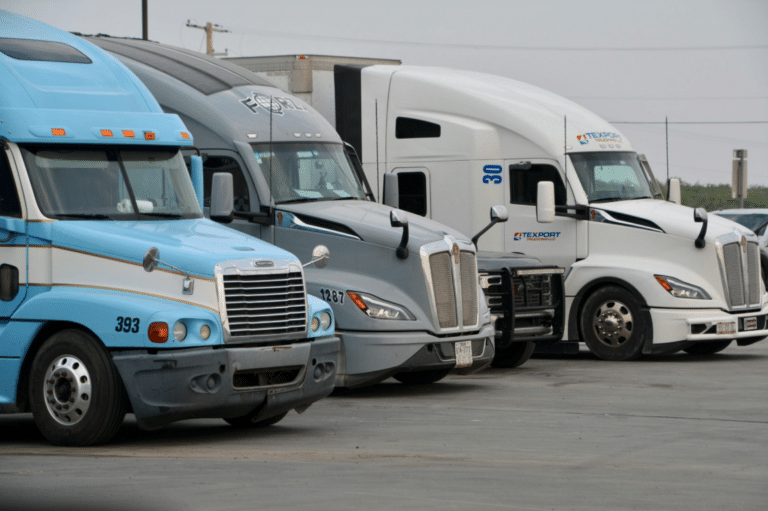
Freight is a pretty general term that covers practically everything that’s hauled professionally across the world. While many people immediately think of 18-wheelers, there are actually many different types of freight trucks that are used for a wide variety of things.
If you’re looking to ship freight, you need to know which truck is the right tool for the job. Here are 8 types of freight trucks and the type of freight they’re designed to carry.
Box trucks are probably the most common trucks you see on the roadway other than tractor-trailers. They’re used by many parcel services and are the basic option rented to people when they’re moving to a new location.
These are smaller trucks with a large, enclosed box trailer attached. They protect your freight from the elements, but they’re only good for non-perishable goods.
These are most often used for smaller local freight deliveries. Think of things like suppliers sending bakeries their supplies early in the morning, or delivering products to a corner store.
This is the bread and butter of the freight world. It’s the standard semi truck you see on the highway. It has an enclosed trailer that makes loading freight easy and protects it from the elements, but that trailer is not climate-controlled.
So, it’s not suitable for certain types of freight. It is a very flexible option with a high load capacity, though. That’s why they’re so common.
A dry van truck is most often used to deliver products and supplies to stores, warehouses, and more. It’s the core of the supply chain system.
This truck’s larger variants look very similar to a standard dry van truck, but there’s a big difference. Reefer trucks have refrigerated trailers.
While that’s not necessary for delivering clothes shipments to a popular department store, it’s absolutely essential for perishable goods such as food, drinks, and similar products that have to be kept at a lower temperature to avoid spoilage. Of course, these are enclosed trucks as well.
These trucks do blend in with other freight trucks, but you’ve probably seen them quite a bit. They have refrigeration units that are visible on the outside of the trailer.
Some reefer trucks are designed for smaller deliveries and resemble vans or box trucks, with parts of the refrigeration system visible from the outside.
Flatbed trucks are much more noticeable, and you likely already know what we’re talking about. These are trucks with a long flatbed instead of a box trailer. The flatbed makes it great for some more specialized freight tasks.
Primarily, it’s used for hauling oversized loads. Oversized loads can’t fit inside your standard dry van, nor is it safe to try, but a flatbed can handle much more product with a variety of methods to secure it. However, it is completely open to the elements.
These can be used to haul heavy landscaping equipment, construction materials, and more.
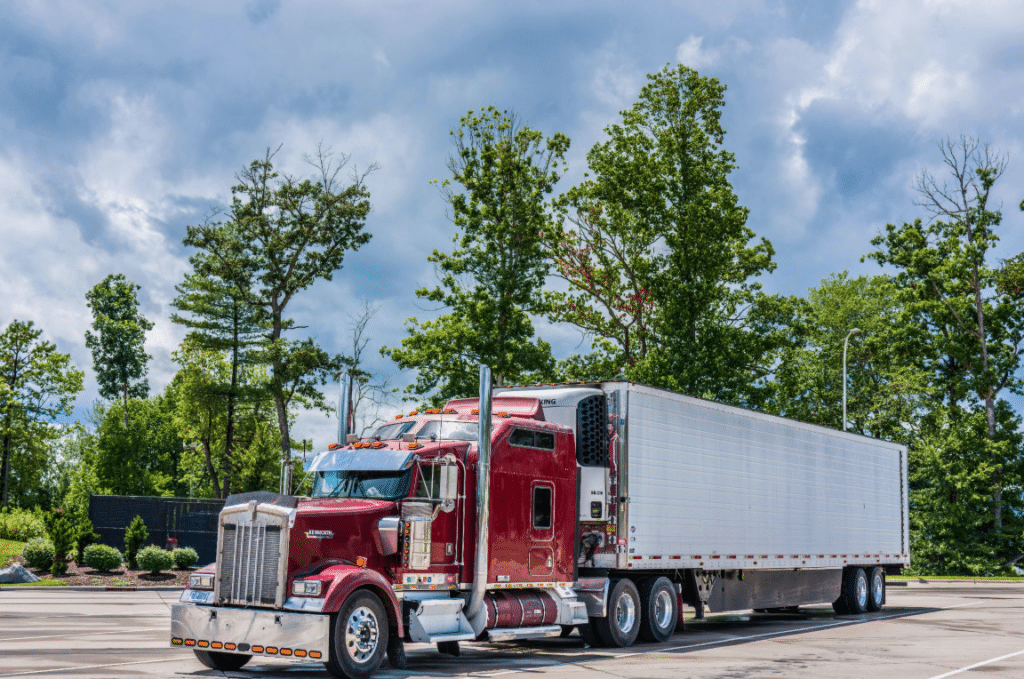
Tanker trucks are very specialized. They’re meant specifically to haul liquid freight. You don’t see them as often in most areas, but one of the most common places you see them is at gas stations. Tanker trucks deliver fuel shipments to them all the time, and you’ve likely seen one in action.
However, tanker trucks are used to transport all kinds of liquids and deliver to all kinds of customers.
These are probably the most specialized type of freight truck. They are specifically made for hauling cars from one location to another. This is how dealerships get their stock from manufacturers, cars get to auctions, and many dealerships ship cars directly to customers with these trucks.
These are usually open trailers with multiple tiers, and the cars are driven onto the trailers via ramps that extend to the ground.
Tautliners are among the more unique and lesser-known types of freight trucks. They’re kind of like box trucks, but the “box” is a set of curtains that come down from rails on the roof of the trailer.
These trucks exist because they are very efficient at loading and unloading. They offer reasonable protection for the freight inside, but the curtains can be drawn back on the sides when the truck is at shipping and receiving docks.
That allows forklifts to quickly access all the freight as if the trailer were an open flatbed. It’s fast, efficient, and dramatically reduces turnaround time.
A step deck truck is a variant of a flatbed truck used for similar applications. However, it features a unique two-tier bed design. The first part of the trailer is lower, and then there’s a step near the front that creates another tier, slightly taller but shorter in length.
This exists to get around the height requirements for loads. Standard flatbeds can’t carry some tall loads, such as industrial equipment and machinery, because the bed doesn’t provide enough clearance.
A step deck truck makes it easier to meet those legal clearance requirements.

There are even more types of freight trucks than the ones we listed, but these are the 8 most common types that you’ll see on the roadway, and if you’re shipping freight, it’s almost certain that it’ll be in one of these trucks.
How do you pick the right one, though? Well, you don’t really have to.
If you choose to work with a professional freight service, they can help you identify the type of truck that is optimal for the freight you’re hauling. You just have to pick a company that cares and puts you first.
That’s where we come in. At Diversified Transportation Services, we make shipping your freight easy. From managing logistics to ensuring proper communication throughout the delivery, we have you covered.
Contact us today for a smooth and simple freight experience.
Whether you're a company looking to improve one facet of your supply chain, your entire supply chain, or simply looking for a transportation and logistics consultation, we can help.

19829 Hamilton Avenue
Torrance, CA 90502